Playing Concerts in Second Life
Mar 1, 2008 12:00 PM, By Jeff Klopmeyer
Learn how to play live music in a 3-dimensional virtual world.
advertisement
|
CURRENT NEWSSTAND ISSUERead the full Table of Contents for the issue on sale now! Click here Subscribe for only $1.84 an issue! Please tell us about yourself so we can better serve you. Click here to take our user survey. |
![]() |
Personal Studio Series This special issue is not only a must-read for users of Cubase software, but it also delivers essential information for anyone recording/producing music in a personal-studio. Click for more |
![]() Listen to these latest podcasts and more: |
|
eDeals Newsletter for Discounts on GearGet First Dibs on Hot Gear Discounts, Manufacturer Close-Outs and Job Opportunities when you sign up to receive eDeals E-newsletter, sent twice a month. Check out an issue get advertising info or subscribe |
|
Virtual Show, Real Money
Second Life has its own in-world currency known as the Linden Dollar (L$), which can be used to buy clothes and other items, as well as services and virtual real estate. Although there is no cost to join SL or to participate in everything it has to offer, if you want to own land (think of it as renting server space), there are fees involved.
The view from the stage of Johin’s Blue Note Club in Second Life. Mike Lawson’s realistic touches include P.A. speakers, floor monitors, a jukebox, and even a popcorn machine.
The in-world currency is exchangeable for real-world cash. Just like with a real-life gig, your compensation for performing is negotiable. Some venues pay their performers a set rate, with popular artists commanding higher fees. Other venues don't pay artists at all but allow them to set out a tip jar so the audience can show their appreciation with a little money. Most of my gigs involve a bit of both; I charge a relatively low fee to the venue but also accept tips.
Before you get too excited, note that it's been my experience that it's rare for an SL gig to bring in more than $10 to $20 in real money. Not bad, though, considering I don't have to leave my living room (or change out of my sweats) to do the gig. And I can do as many shows per week as I choose. However, there are other benefits to playing in SL beyond monetary compensation and convenience.
First, this is an easy way to promote your music to an international audience. I've cultivated a fan base in SL, many of whom have expressed interest in purchasing my next album when it's available. Second, every performance gives you an opportunity to hone your craft.
SL is hungry for live music. I once played a show in the middle of a weekday and found 40 to 50 people waiting to see me when I arrived. Try that at your local coffeehouse.
An Avatar, a True Star
You can become a well-known musician in Second Life through promotion, just like you would in your first life. However, it's much easier in Second Life because this online world represents only a portion of the real world (at least for now). Although you can use SL's events listings to get people to your shows, you can also join groups that help promote live music there. Beginning performers will be happy to know that many venues have open-mic times; those are a good way to get your name out.
There are Web sites and forums dedicated to the Second Life music community, such as http://slmc.myfastforum.org. As you get more serious about your SL career, you can set up a Web site or MySpace page for your avatar, as I've done at www.myspace.com/zakclaxton. There, I announce upcoming shows, talk with fans, post photos from previous gigs in my blog, and do all the stuff you'd do to promote a serious real-world band or artist.
There is a lot more to discover about Second Life. Try signing up for the basic membership, which is free, to get the hang of walking around and teleporting throughout the grid. Then go to a show or two and get the vibe. Before you know it, you might end up as a rock star — virtually, anyway.
Jeff Klopmeyer (aka Zak Claxton) is a music/audio technology expert with more than 25 years of experience as a gigging and recording musician. Despite his Second Life escapades, he still loves playing in the real world.
Building a Second Career
FIG. A: Mike Lawson plays a concert in Second Life (as Von Johin) from his home in Nashville.
Photo: Courtesy Mike Lawson
I've performed in clubs, festivals, street fairs, and concert halls since I was a teenager, but I've grown tired of the normal gig scene. I started performing in SL as Von Johin after learning that an old friend, ambient musician Tony Gerber, was gigging there. Eventually, I bought land and built a venue, Johin's Blue Note Club, making it look like an amalgam of the juke joints I've played around the country. Every Wednesday, the club fills to capacity, which is about 20 people seated and 35 standing. My wife soon joined SL and learned to make clothing and other items to sell. We bought more land and attached it to the club, and Johin Village was born.
To make the club feel realistic, I added a jukebox, a pinball machine, and a P.A. system with floor monitors. Von Johin sits on a stool with mics for voice and guitar, while people dance in front of the stage, sit at the bar or tables, or stand and socialize in an open chat as he plays. They can also type in song requests.
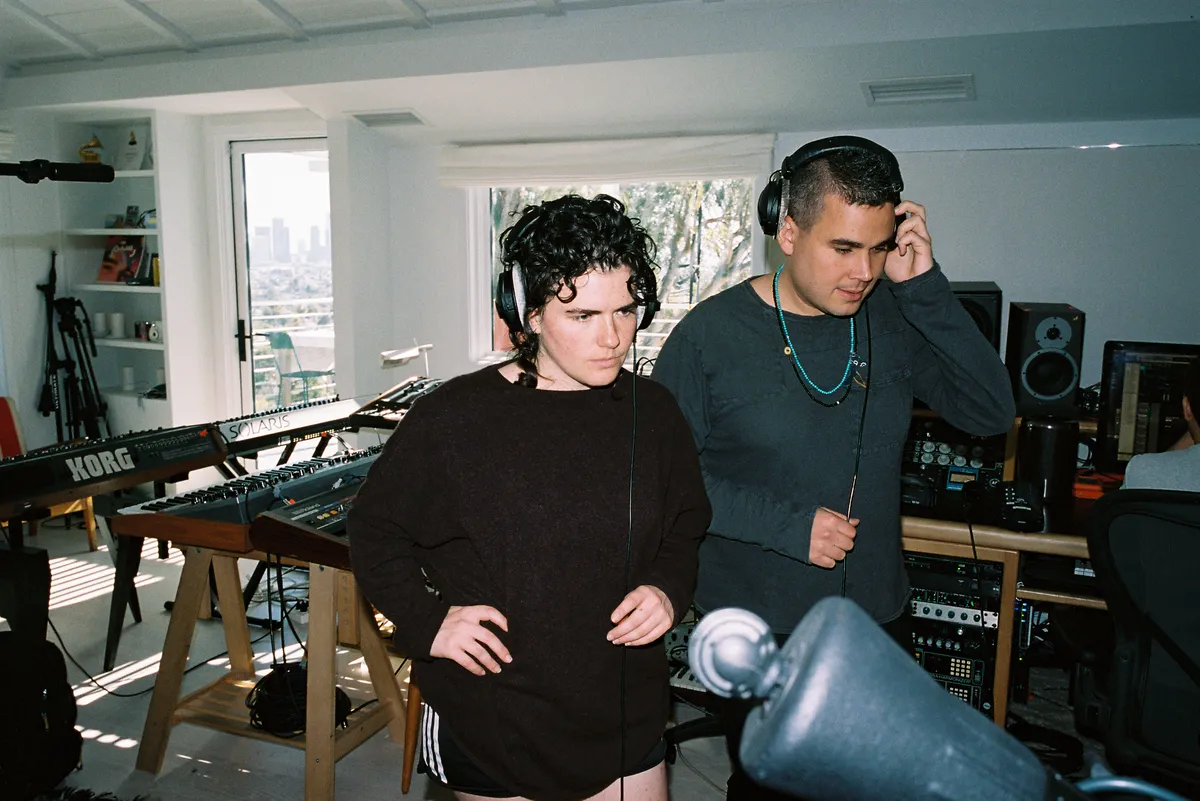
I capture my real-life audio with a pair of Violet condenser mics — a Globe for vocals and an Amethyst Vintage for the guitars — going through a Focusrite Platinum Penta preamp/compressor into a Digidesign 002R interface (see Fig. A). When I travel, I use an Mbox 2 interface and use the high-speed Internet connection at the hotel. When you see Von Johin holding a Gibson J200, it's because I'm playing a Gibson J200. When he switches to a Gibson J160E or Hound Dog Dobro, it's because I've switched in real life. I don't have to do that; I just think it's fun.
I use Nicecast for streaming. It hosts AU and VST plug-ins, so I can add reverb if I want. But I find that effects can make things less stable, so I broadcast dry. I use a direct cable connection to my high-speed cable modem. Wireless and SL is not the best combo due to packet loss of data, and you're asking for problems if you do a show wirelessly. When I'm not performing, I use Nicecast to send music into my land and club from my iTunes playlist.
Renting a Shoutcast stream from another avatar in SL costs me $16 a month for 100 simultaneous listeners. (For slightly more, I can have unlimited listeners.) I also use Nicecast to capture a 128 Kbps MP3 archive of all my shows, which I edit and make available on the Von Johin Web site (www.vonjohin.com), because I often get requests from Internet radio operators in SL for my recordings.
In the first few months, I played about 40 concerts, earning the equivalent of $40 to $50 in Linden Dollars (L$) at each performance outside of my club. The exchange rate is about 1,000 L$ to 4 U.S. dollars, and my average take each show is from 10,000 to 15,000 L$ in tips from concert attendees and fees from the club owner. Obviously, when I play my own club, I don't get a fee from the owner, so I earn about 5,000 L$ less there. Sure, I make half as much as I would in a real club, but I don't have to leave my house.
And I now have fans all over the real world who log on to hear me play. What's not to love about that?
Additional Resources
Want to use this article? Click here for options!
© 2008 Penton Media, Inc.