Most Popular


The EM Poll


browse back issues

Sonic Surgeon

May 1, 2004 12:00 PM, By Mike Levine


         Subscribe in NewsGator Online   Subscribe in Bloglines
 

CURRENT NEWSSTAND ISSUE

Read the full Table of Contents for the issue on sale now! Click here

Subscribe for only $1.84 an issue!

Please tell us about yourself so we can better serve you. Click here to take our user survey.

MixBooks Logo
Life in the Fast Lane

This collection of St.Croixs columns was assembled during the two years following his death of cancer in May 2006. Included are many of his most-read columns, as well as personal notes, drawings and photographs.

Click for more books
EM Podcasts

Listen to these latest podcasts and more:
Bela Fleck on recording Jingle All the Way.Go

What's New: software and sound products. Go

eDeals Newsletter for Discounts on Gear

Get First Dibs on Hot Gear Discounts, Manufacturer Close-Outs and Job Opportunities when you sign up to receive eDeals E-newsletter, sent twice a month. Check out an issue get advertising info or subscribe

When BT starts talking about music technology, he seems almost like a kid in a candy store; everything to him is mind-blowing, amazing, or insane. He practically bubbles over with enthusiasm about the latest, greatest gear or some cool, new software that he's used. He could seemingly go on for hours about plug-ins, software instruments, surround mixing, time correction, and the incredible and meticulous detail that he puts into the production of his music. But awed though he might be by the technology at his disposal, he's in control of it to a degree that few others are bending and twisting digital audio and synthesis to fit his unique musical vision.

One comes away from talking to BT convinced that he's not only a pioneer of new and different ways to use digital processes such as waveform editing and time stretching, but that he uses them with a level of detail that's truly remarkable. He approaches the production of his music with almost surgical precision. Yet with all the digital manipulation that he brings to bear, there's nothing machinelike about the end product. He's a highly talented songwriter and producer, and his recordings exude musicality.

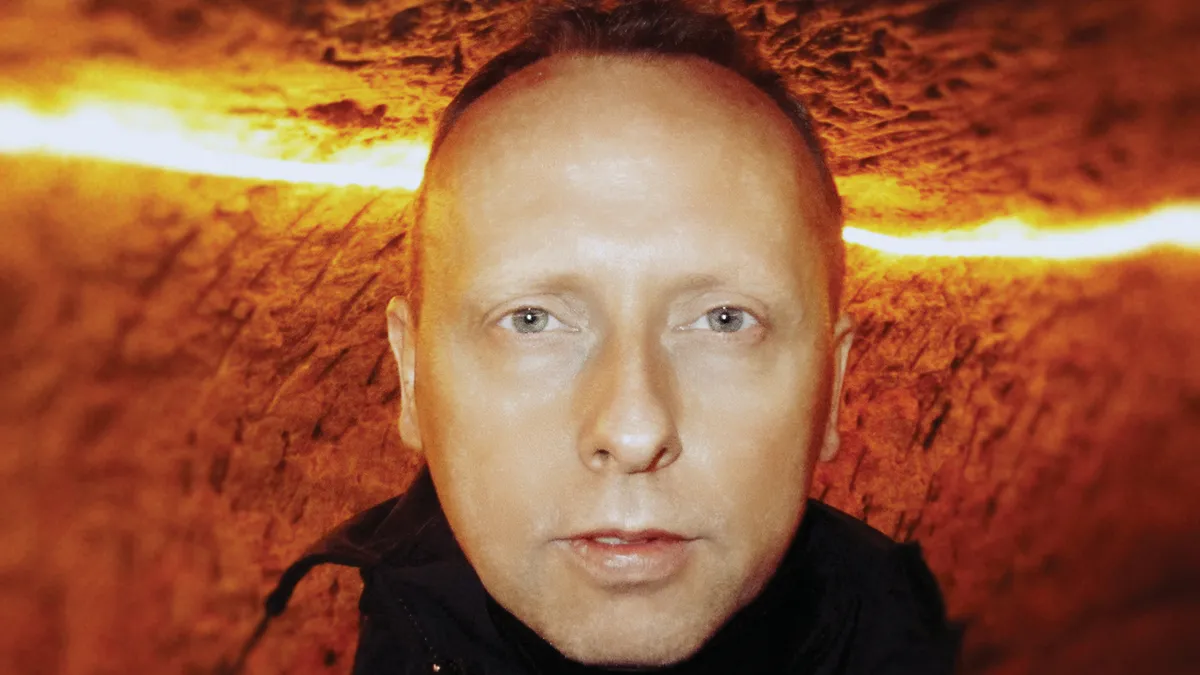
A case in point is his recent CD, Emotional Technology (see Fig. 1), a sparkling collection of catchy, driving dance music mixed with elements of rock, pop, and hip-hop. It features intricate sound design and frequently distorted, heavily processed vocals, and it is made up of tracks that have been meticulously (almost obsessively) chopped up, rearranged, and time-corrected.

BT, whose full name is Brian Transeau, is firmly established as a fixture on the electronica and pop scene. His initial claim to fame was as one of the key figures in the development of the electronica subgenre of trance (aka epic house). Subsequently, however, he has branched out in a variety of creative directions. Besides being a solo artist, he has worked as producer, arranger, mixer, and remixer for a diverse group of artists, including Tori Amos, 'N Sync, Britney Spears, Mike Oldfield, Paul Van Dyk, and Lenny Kravitz. He's also an in-demand film scorer; his credits include Fast and Furious, Monster, Under Suspicion, and Zoolander.

BT grew up in the Washington, D.C. suburb of Rockville, Maryland, where, at age four, he got his start in music studying classical piano. As a teenager, his attention shifted from Bach and Beethoven to synthesizers and sequencers. He writes on his Web site (www.btmusic.com), “After being introduced to artists like Cabaret Voltaire and Depeche Mode, I turned my back on classical music for quite a while.

He enrolled in Boston's Berklee College of Music but dropped out in 1990 after only a year in order to pursue his music full-time. His path took him from Boston to Los Angeles, and back to the D.C. area. Eventually his music was heard by British DJ Sasha, who helped him find an audience for it in England. BT's first release, IMA (Perfecto/Kinetic Records, 1996), became huge on the English dance scene and catapulted him to fame in the world of dance music.

Eight years, four CDs, countless remixes, and a slew of film scores later, BT lives in the Los Angeles area and works mainly from his personal studio. By his own admission, he spends ungodly amounts of time holed up in there working. I sit there 40 hours straight sometimes, he says.

To ease the strain of such marathon hours, he's made his studio environment as pleasant as possible (see Fig. 2). To that end, it's now stocked with three Apple Cinema Displays. “It takes half an hour to drag something to the trash,” he jokes. His computers, which form the heart of his studio, include a Macintosh G5 (which is just now being integrated into his setup), a pair of Macintosh G4s, a custom PC running Windows XP, and a Symbolic Sound Kyma system. (See the sidebar “Inside BT's Studio” for a complete list of his studio gear.)

My initial interview with BT for this story took place not long after the release of Emotional Technology. We spoke at the bar of a trendy New York hotel, and BT was accompanied by Tootsie, his ubiquitous Boston Terrier, who sat quietly in the chair next to him.

There's a lot of sound design mixed in with the music on Emotional Technology. Have you always done that on your records?

I have, actually. The sort of soundscape; the designing of a space. I like to create compositions individually as an environment, and within that environment it's all about setting space. So sound design has always been an integral part of what I do. And, obviously, the better the tools get, the better my programming chops get; the better I get at coding, the more interesting the soundscapes become.

When you use the word soundscape, are you also talking about the ambiences that you include in your music?

Definitely. There's so much attention to detail put into building a space in these tracks. Take, for example, a song like “Paris”: that track has the sound of me scuba diving — which I've time-corrected in unreal note values above 64th notes (128th notes, 256th notes, 512th notes) — which is a technique I call nano correcting. I developed it while doing this record. So I time-corrected the sound of my scuba regulator.

Is there a simple way to explain nano correcting?

I just finished outlining a book I'm writing on time correcting and stutter editing. There will be a chapter on nano correcting. There's going to be a chapter on frequency-specific swing and on gravitational swing and swing templates — it's really complicated. It's funny, because I sat down to try to explain it to myself as if I were going to articulate to another person how to do it from step one, and it's not simple. [Laughs.] Basically, nano correction is correcting unreal note values. So anything above 64th notes.

So what does the listener hear when you nano-correct a piece of audio?

I think what happens when you're correcting into unreal note values, or when you're correcting things too small to be perceived as notes, is that your brain is drawn to the symmetry, because symmetry is a reoccurring, aesthetically pleasing thing all throughout nature. What your brain attaches to is the symmetry in the event, rather than something being rhythmic.

INSIDE BT'S STUDIO COMPUTERS

Apple Power Macintosh dual G4/1 GHz (OS 9)

Apple Power Macintosh dual G4/1.42 GHz (OS X)

Apple Power Macintosh dual G5/2 GHz (OS X)

Customized PC (Windows XP)

Symbolic Sound Capybara 320 Sound Computation Engine (for the Kyma system)

Expansion chassis for Pro Tools system (contains two Mix Core and six DSP farm cards)

DJ SETUP

Pioneer CDJ-1000 (CD turntable)

Pioneer DJM-600 (mixer)

Technics SL-1210Mk2 Quartz turntables (2)

KEYBOARDS

Access Indigo 2Hartman Neuron synthM-Audio Radium MIDI controllerM-Audio Oxygen8 MIDI controller

Roland JP-8000

MIXERS

CM Labs MotorMix (used for Kyma)

Rolls RM203 stereo line mixer (used as a volume knob)

RACK

Digidesign 1622 audio interfaces for Pro Tools (2)Digidesign 24-Bit ADAT Bridge interface for Pro ToolsDigidesign 888 audio interfaces for Pro Tools (2)Digidesign Universal Slave Driver sync box for Pro ToolsEmagic Unitor8 MIDI patch bayEsoteric Audio Research Limiting Amplifier 660Focusrite Red 7 mic preamp/dynamics processorFurman PL-8 power conditionerGlyph dual SCSI removable hard-drive bay (with 2 Cheetah drives)Glyph single SCSI removable hard-drive bay (with Cheetah drive)Hafler Trans-nova power amplifierJVC 3/4-inch tape deckKorg 03R/W rack synth (instrument)Kurzweil K2500RS sampler (instrument)Lucid GENx6-96 Word/Super Clock GeneratorNeve vintage 1073 preampRoland GP-100 guitar preamp/processorTripp Lite Power ProtectionVideo reference clock (black burst generator)

Z-Systems Z-8.8r Digital Detangler Pro patch bay

SOFTWARE APPLICATIONS

Ableton Live 2.0Digidesign Pro Tools 5.2 (OS 9 Mix Core system with DAE/AudioSuite/RTAS)Emagic Logic Platinum 6.1.1 (OS 9 uses Pro Tools hardware)Emagic Logic Platinum 6.3.1 (OS X)KymaPropellerhead Reason 2.5Sony Digital Pictures Acid 4.0Steinberg V-Stack

Tascam GigaStudio 2.

SURROUND SPEAKER SETUP

M-Audio Studiophile SP-5B (5)

M-Audio Studiophile SP-8S subwoofer

VIDEO MONITORS

Apple Cinema Displays (3): 23-, 22-, and 21-inch models

Beyond sound design, you've said that you also use time correction to tighten up and alter all the instrument tracks in your music?

There are literally 50 different approaches to time correcting, depending on the source material. I'll use a different time-stretch algorithm for fuzz guitar, for repetitive wave cycles, as opposed to ones that have a lot of upper and harmonic content. I'll cut things that have a lot of subharmonic activity in them off-axis, and conjoin things off-axis instead of doing fade-ins and fade-outs. It's such a crazy technique.

So the time-correction process — which you've said can include cutting up audio, EQing it, compressing it, time-stretching it, and correcting to a particular note value — opens up an entire other world of control for you.

It's infinite, man. And I feel a big sense of responsibility having the kind of tools to be able to do stuff like this. I think of my heroes who I know would have wanted them. A guy like Stravinsky. I have a responsibility to do something interesting with these tools.

After you record live instrument tracks, do you time-correct them, too?

I do it all the time.

So you alter them pretty radically?

Radically. You see the thing is, I love completely live music. I love it. Jazz, classical music, I love that. In terms of the performance aesthetic of that sort of music, I absolutely love it. It's not the kind of music I'm trying to make. If I'm doing something that's with a live band, I'm always going to be gelling it with programming. I can make it sound like it's live, but I'm always going to want to have percolating Acid lines or cool granular synthesis or a breakbeat augmenting the live drums. The only way that I've found that you can sort of sell it to your ears — that this acoustic performance is happening in tandem with programming — is time correcting. They gel together like they were meant to go together. Otherwise it's always like flamming snares, and hi-hats from the loop are flamming against this, that, and the other thing, and the live drums, and it just sounds unnatural.

How long does it take you to time-correct an entire song?

It can take two months.

So time correcting is more of a time drain than mixing?

Absolutely. The funny thing is, though, that when you time-correct something, you wouldn't believe how much your mix issues resolve themselves.

Because in the process you also get rid of the rhythmic slop and unnecessary frequency information?

All the stuff that you're always trying to EQ out or compress is gone — oftentimes — when you time-correct something well.

I noticed some pretty unusual vocal treatments on Emotional Technology.

In my compositions, if the vocals don't sound like some sort of fractal collage, I'm bored witless. Vocals are the one thing on which radical effects treatments really stand out. That's why I like doing it to them.

Because they're so up-front in the mix?

Exactly. You really, really hear it. On “Somnambulist,” the lead vocal had 6,178 edits to it. It's going in the new Guinness Book of World Records as the most edits in a piece of music. It's a fun thing to do on vocals because they're usually front and center and you realize, “Oh my God, it sounds like this person is in a blender in time.”

You use a lot of distortion and other effects on your vocals. What effects in particular do you like to use on them?

Literally — and this is not to hoard secrets, because you can see how open I am to talking about it — thousands of plug-ins: everything from standalone applications like SoundHack, to Yowstar Girl for granular synthesis, right through to Wave Mechanics Pitch-Blender and FilterFreak, or an Arboretum plug-in, or things coded in Kyma. Literally thousands, right down through running it through a $125 Z.Vex Woolly Mammoth guitar pedal and out the amp, and miking it and back in.

Let's take your creative process from point A to point B. Do your compositions always start with just a musical idea?

Absolutely. That's how it always starts for me. It never starts for me sitting at the computer, ever. It has started for me sitting at a guitar or sitting at the piano and noodling. I won't allow it to start at the computer. I want to impose my will on the technology, I don't want to have it impose its will on my artistic sensibilities. I refuse to be defined by machinery.

But isn't it difficult to avoid having the parameters and limitations of the technology shape your music?

The tools have to be an extension of your fingertips in the same way a guitar is supposed to be, or in the same way that a pencil and staff paper are supposed to be. I'll give you a perfect example: if you look at modern electronic music, the way that computer-based sequencing is set up has totally defined what electronic music sounds like. One hundred percent defined it, down to the not-so-subtle things like you load it up and the default setting is in 4/4 at 120 beats per minute.

So how do you keep it from influencing you?

You've got to constantly hold [your work] up to the light and say, “Did I make this sound like this because I was using Reason?” If so, I'm not going to use Reason for a couple of months. I'm gonna build it from scratch. As opposed to being handed a sand castle and then finding a nice piece of beach to plant it on, I want to build the thing grain by grain, and I want it to be my own.

Let's get back to your creative process. Generally do you get an idea for a melody first?

Usually a melody, or a harmonic idea like for a progression. And I'll be working it out in my head, thinking, “What inversion is that chord in?” And, “Damn, I tried to forget my performance ear-training classes and now I wish I remembered them.” You know, that kind of stuff. I'll start making myself a little chord chart with a melody line if I'm not near an instrument. Or I'll sing an idea into my cell phone. And then I'll sit at an instrument and write a song, and then I'll sit at the computer and make it happen, make it interesting.

What's your main sequencer?

Logic Audio.

Do you have much hardware-based sound gear — synths, modules, samplers — anymore, or is it all software based?

Hardly anything. It's so funny because on my last record, Movement in Still Life [Nettwerk Productions, 2000], I made a point on the track “Dreaming” — I said that this entire sound was composed using soft synths. And people freaked out. They're like, “That's not possible, blah blah blah.”

When were you producing that album?

In '98. And so people were just completely thrown by that. Now people come to my studio, and all my old beautiful vintage synthesizers — EMS VCS3 “Putneys,” ARP 2600s — are in storage. I don't use any of that stuff [anymore]. I got a bay of computers and each one functions as a synthesizer. I run OS X on one so I've got all my AU plug-ins on that. I've got a PC that I run Tascam GigaStudio and Native Instruments Reaktor on. I have another Mac that I run OS 9 plugs on, and then I have my main computer.

Are they all connected by MIDI?

They're all connected by several things. They're all on an intranet at my home, so they can all use shared drives and stuff like that.

Do you have any particular soft instruments that are your favorites?

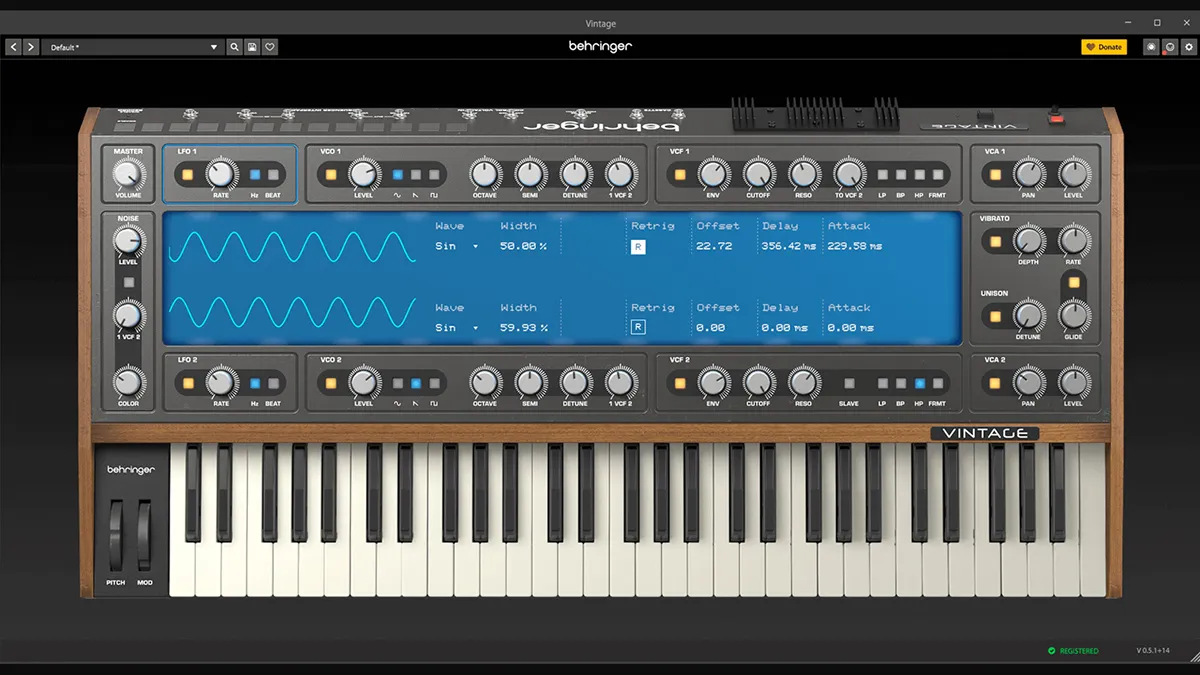
I have literally thousands of soft synthesizers. That's not an exaggeration. Just in Steinberg V-Stack on the PC — I detest PCs, but they're kind of a necessary evil — I have at least 1,200 Synth Edit synths, and I use all of them. And then the AU — I probably have 200 AU plug-ins, and 500 to 600 OS 9 ones. Some of my favorites — just to throw some out there, because I'm one to talk about anything I use — I love Big Tick Rhino for the PC. I love Istvan Kaldor's Rotopuker — it's amazing [see Fig. 3]. For OS 9 I love Native Instruments Absynth and Absynth 2. Synapse Scorpion is an amazing one; Synapse Junglist [now called Hydra] is amazing. The Emagic EXS24 [see Fig. 4] is my favorite sampler ever made. I love that thing so much. I like Atmosphere a lot; it's really useful. My main sound-design box is Kyma, the Capybara system [see Fig. 5].

I've heard that it's amazing.

It's the wormhole. It's the sort of door you open, and on the other side are infinite possibilities in sound.

I gather that you prefer Macs to PCs?

Let's start at the beginning. I prefer Macs to PCs just because of the whole design ethos. Apple is a company of forward-thinking people trying to do exciting and interesting stuff, and executing that with a groundbreaking and pioneering team of creative, non-suit-wearing hippie types. That's totally my vibe. Second, aesthetically, nothing holds the appeal of a Macintosh. There's not a computer you can show me in the world that's sexier than a Mac. Third, and most important, the Mac operating system lets me be creative; the architecture of the machine and the system that I'm working on become totally secondary to my creative process. I'm never going, “Goddammit, I want to eject this CD!” Everything is fluid and easy to work. I love that. It makes working on a computer so much fun. I don't want to think about using a computer while I'm composing. I want it to be like having a guitar in my hand. Using a Macintosh is like that.

One of the great things about Logic is how much you can customize it. I imagine you do a lot of customizing.

It's just obnoxious how customized my Autoload is. The equivalent would be the most pimped-out, dropped-suspension, rice-rocket car possible. With a booming 5.1 system and dual 15 subs in the trunk. That's my Logic Autoload.

So somebody used to the stock Logic setup wouldn't recognize it?

They'd say, “What the hell is this?” The cool thing is a lot of my friends who use Logic — we have discussions about implementing new key commands. We're all on the same set of key commands. So there's a group of about 15 of us — the Real World guys at Peter Gabriel's place are on my key commands, Sasha's on my key commands, we're all on the same key commands. So when we go to work on one another's computers, we can work. We don't have to swap. We have this consortium, this think tank for deciding on key commands.

You compose, record, and edit at your home studio, but do you mix someplace else?

No, I mix at home.

Do you mix mostly in the computer with a control surface?

No control surface; I'm a mouse mixer.

And you do all your mixes that way? You don't have a big console?

No. A lot of my mixes are committed [with the effects and EQ on the tracks before mixdown]. I'm a huge AudioSuite fan, and it's one reason why right now I could never move off of Pro Tools hardware. Because I'm all about committing those processes to the audio. If I like a compression, why have it on a fader? I'm not going to change it. If the dynamic of the track starts being affected by how dramatic a compression is, I'll trim back other elements. I'd rather hard-process things — that's part of what helps me finish tracks, too. I'd rather make a commitment.

But if you're writing something, and building it up one track at a time, might not the stuff that comes later affect how much of that compression, or any other effect, you want to use?

Never. You build it around it. As an engineer friend of mine put it, “The way that you write is the way that we were taught to do shelving. You pick sounds that are in specific frequency ranges, and then they all end up fanning together and fitting.” It's something that I realized I do subconsciously.

So writing, arranging, editing, and mixing are an integrated process for you. You don't say, “Okay, all my tracks are done; now I'm going to mix.”

Never. By the time the song is written, it's also mixed and time-corrected. It's a weird way of working.

So the main thing in your mixes is getting levels right, but not a lot of equalizing?

No, there's not a lot of post stuff. There are insanely intricate things going on, but they're done during the writing process. The things that I will always use live [during the mix] are reverbs and delays, because those I change. But compressions, no; filters, maybe. If I'm sweeping something, I'll leave that on a fader. But for the most part, it's reverbs and delays — wet effects. It's never the crux, the core component of how that sound is sounding.

What in your music really grabs the listener's ear?

One thing that stylistically I do a lot, that I think resonates with a lot of the people who like technologically based music or make technologically based music themselves, is insane — and I picked that word carefully — insane attention to detail. That's one of the things that people pick up on in what I do. It's the real care and attention to detail. Nothing is in there by accident. There's not an extraneous reverb tail in my music, there's not a single ringing frequency below 150 Hz on a single hi-hat on any one of my last three albums. There's a psychotic attention to detail. There's also a lot of ear candy because of that attention to detail.

Can you give an example of what you mean by ear candy?

I like having these dramatic transitions in my songs; an extraordinary amount of detail to facilitate huge set changes. I might come out of a section with a live band playing: live guitar, live bass, live drums. Then maybe one or two synth lines and go into a breakbeat from Kyma and Reaktor and distort the vocals. I like to change dramatically like that. There needs to be all kinds of intricate spills, reversing noises, rising sounds, reverb tails across a conjoin — just crazy stuff to join those areas together. So I like to think that the attention to detail in what I do resonates with people.

Do you ever worry that you're going to overdo it and mess up the groove?

Yeah, definitely. But once the composition is there, everything is time-corrected, the beats are right, the bass is hitting right, you've written a great melody, the lyrics are strong, you've got interesting harmonic things happening — at that point it's just a wide-open canvas. I don't think you can overthink it at that point. For me, making music is a two-stage process. There's the initial cathartic, creative blah, in which you get out the feeling, the emotion, the idea. In that phase, you can't overthink anything. That's a 5- to 15-minute thing, writing a song. But then after I make a commitment to that idea, the lab-coat part of me takes over and I get nano-technology on it. At that point I don't think there is such a thing as overthinking it.

With all these possibilities at your fingertips, how do you know when to stop?

You know, I must have an enzyme in me that tells me when a piece of music is complete. It's really strange. I'll be noodling until the cows come home, but there's just a switch in me. People ask me that question all the time. And I tell them, “The song tells me ‘you're done,’” and then I'm done.

Have you done a lot of surround work?

I will never mix in stereo ever again, ever.

What about Emotional Technology? That was stereo.

It's my last thing ever in stereo. I mean ever. I recently just started mixing in surround, and there's absolutely no going back for me. I cannot.

Have you put out anything yet that's mixed in surround?

I just wrote the score to Monster in surround sound, and it's a completely different experience.

So is it boring to you when you do a stereo mix now?

I can't do it anymore. I'm not even joking.

What are you going to do on future records?

I'll never do stereo mixes anymore. I can't, man. After sitting in the middle of this immersive environment and being a part of it, instead of being a listener.

So you think eventually everything will be multichannel?

Absolutely.

Is 5.1 okay for you, or do you need more, like 7.1?

No, 5.1 is great. One of the key things I've discovered already about 5.1, the format, is to forget about the center channel. That's because it kills the stereo imaging in the front. If you're going to use the center channel, use it creatively. Don't ever use it glommed with the left and right channel. It just kills the stereo imaging. But I've done weird things like having a bell in the center channel and then throwing a reverb with different predelays in the back speakers. I love 5.1, it's so much fun. Beware — if you set up a 5.1 system, you're screwed. I swear to God. [Laughs.]

Many of the surround mixes that I've heard don't take a lot of chances. They seem so conventional.

They're terrible. They're horrible.

Why are so many engineers scared to take surround mixes out?

Most of the people who have access to surround mixing right now are film guys. And most film guys are just nine-to-fivers: “Send the same 20 kHz spike to the subchannel. It's my lunch break.” I'm intimidating to a bunch of people like that, because I walk in and I say, “Let's f — k this up, let's do something interesting. Put the kick drum in the back channels. I want to run the brass parts through a Marshall amp coming out through the center channel.” And they're like, “Wait a minute dude, my lunch is in 15 minutes.” So now I've taken to mixing the stuff at my house and delivering 5.1 sound.”

Have you done the mixes for the movies that you scored?

Monster is the first one that I've done.

Is creating a film score different for you musically than working on your records?

It is, but in a good way. Because I studied so much orchestrating and counterpoint and theory and stuff.

What did you major in at Berklee?

I didn't graduate, which is a funny thing because when I go back there now, they call me a graduate. But I studied this stuff starting real young. I studied string writing and fine orchestration and harmony theory.

So you were learning classical back then.

Yeah, a classical kid, big time. So all that stuff I learned as a kid, I haven't been able to implement into my records because it's cost-prohibitive. I can't hire an A-list string section for three hours, because it costs $200,000 to get the best players. But I get to use them on a film, because the studio pays for it. It's great. I stand there with a baton and conduct it.

Since you're writing these things for orchestras and live musicians, I assume you can't get into all the manipulation of audio like you do on your records?

Oh, I do. I time-correct all that stuff.

How has the response been to your Monster score?

Really positive, man. One of the coolest things about the response to the Monster score is that everyone keeps telling me they can't believe it's me. And I love hearing that. I know I've done something good when everybody says, “I can't believe you did that.” I don't know if that's an insult or a compliment; I'm taking it as a compliment, though, because that says to me it's so off-the-beaten-path for what I'm known for, that I'm making progress.

Can you offer any advice to our readers that will help them with their composition and production?

The first thing I'd say is to get a copy of The Artist's Way, by Julia Cameron (J.P. Tarcher, 2002). Read it, and practice it. It's the greatest book ever written for creative people. If you haven't read it, if you haven't done the exercises, it's a must-do for anyone creative. The second thing, whatever your chosen field of music, is to make sure to study other fields of music, because they will inspire and influence your work in a way that you can't yet imagine. If you're looking to be a DJ, study jazz; you might not want to just be a DJ. The other thing is to pick an instrument and learn to play it. It's cool to be a computer jockey, but it helps immensely to have a fundamental understanding of an instrument. Keyboard is always the best one, because you end up studying melody and harmony at the same time.

You attended the recent Winter NAMM show. What were some of the cool things you saw?


Acceptable Use Policy
blog comments powered by Disqus

Get Copyright ClearanceWant to use this article? Click here for options!
© 2009 Penton Media, Inc.

Back to Top