Studio Junkie
Apr 1, 2008 12:00 PM, By Mike Levine
Games, film, remixes, electronica—Junkie XL does it all.
BONUS MATERIAL
Web Clip: Watch a video of Junkie XL showing off the gear in his multiroom project studio.
Podcast: Listen to more of the interview with Junkie XL.
advertisement
|
CURRENT NEWSSTAND ISSUERead the full Table of Contents for the issue on sale now! Click here Subscribe for only $1.84 an issue! Please tell us about yourself so we can better serve you. Click here to take our user survey. |
| |
![]() |
Life in the Fast Lane This collection of St.CroixÕs columns was assembled during the two years following his death of cancer in May 2006. Included are many of his most-read columns, as well as personal notes, drawings and photographs. Click for more books |
![]() Listen to these latest podcasts and more: |
|
eDeals Newsletter for Discounts on GearGet First Dibs on Hot Gear Discounts, Manufacturer Close-Outs and Job Opportunities when you sign up to receive eDeals E-newsletter, sent twice a month. Check out an issue get advertising info or subscribe |
|
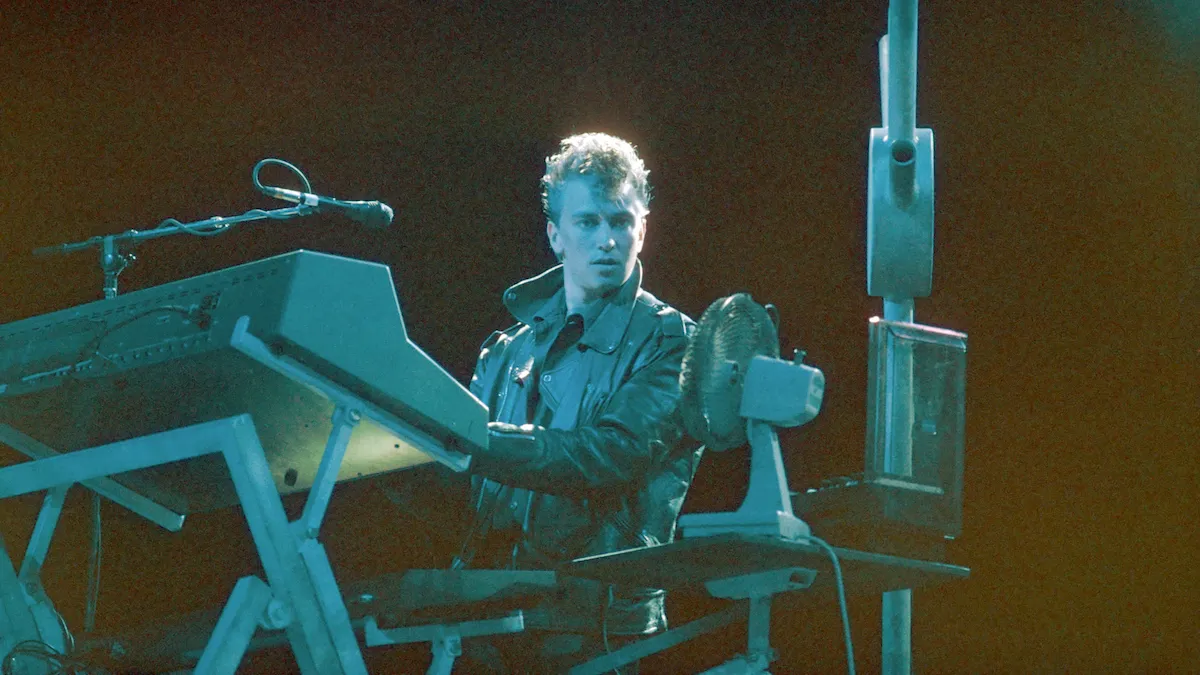
FIG. 1: Guitar is one of the many instruments Holkenborg plays, and he likes to come up with ideas for sounds by playing through an array of (mostly Electro-Harmonix) effects pedals.
When Tom Holkenborg was a young musician growing up in Holland, he spent so much time playing music and recording that his friends dubbed him “Junkie.” The name has stuck — he now records under the moniker Junkie XL — and so has his obsession with music making. From recording his newly released album of hard-edged electronica, Booming Back at You (Artwerk Music, 2008), to writing music for hit games such as The Need for Speed and SSX Blur, composing music for films like Blade and Dead or Alive, and remixing songs by artists such as Coldplay, Elvis Presley, and Britney Spears, Holkenborg has developed a busy and diverse career.
Ground zero for Holkenborg's work is his impressive project-studio complex, a few blocks from the boardwalk in the Venice district of Los Angeles (see Web Clip 1). Here, Holkenborg has built a studio that would be the envy of any recording musician (see Fig. 1), complete with a maxed-out Digidesign Pro Tools HD system; a separate Mac for running Apple Logic Pro, which he uses for MIDI work; several additional PCs for running Native Instruments Kontakt; two huge Apple displays; Dynaudio and M-Audio surround speaker systems; a collection of guitars, basses, and effects pedals; and much more — and that's just for his studio. There are also two other setups in the building at which his assistants, Sam Estes and Andre Ettama, work.
![]() Find related books, DVDs, tutorials, guides and resources here... Recording Music Production |
I had a chance to visit Holkenborg's studio recently. And with a cappuccino in hand from the studio's espresso maker (another key piece of gear), I sat down with him to talk about recording, equipment, and his career.
I notice there is an absence of outboard gear in your studio; there are just a couple of Empirical Labs Distressors that I can see. Are you recording pretty much all in the box these days?
Not really. I've got an outboard gear rack in the other room. And then I still have a full-blown analog studio in Amsterdam that I'm dismantling step-by-step and just getting stuff out here. I've got a 132-channel analog desk with Neve EQs, a 24-track Studer, a 2-track Studer, Fairchild compressors, Klein and Hummel compressors and equalizers, Telefunken compressors. I've got all the synths made by Korg since the very beginning: Yamahas, an Oberheim 4-voice and an 8-voice. I've got about 50 synths.
Did you do this most recent CD here, in Amsterdam, or in both places?
I did it all here. One of the main reasons why I work almost completely digitally these days is time. When you work on video games or movies or you work on commercials, everything needs to be done yesterday. And you need total recall to change the slightest little detail. And after directors and film studios and ad agencies have signed off on a certain product that you have delivered, you can't deliver something else afterwards that is even slightly different from what you sent them before. When I work on my artist material, that's the only situation where I can really take the time and just noodle with sounds forever until I'm happy with them.
I was particularly impressed with the synth sounds on your new CD. Did you program those all yourself?
I work like this nowadays: with music, it goes back and forth between different programs all the time [see Fig. 2]. For instance, I program a kick drum, just as a kick click, and then I start jamming with the bass guitar. And then I come up with this bass riff, and I just jam and jam and jam — and then at some point it's like, “Oh, that's pretty cool.” So then I take that section, and I bounce out the bass guitar sound. And then I go to Sam, and I say, “Sam, I've got eight bars of bass guitar here. Load that up in [U&I Software] MetaSynth, and then I want you to do this and this and this with it.” Then I go to my other guy, Andre, with the same bass line, and I say, “Why don't you program 15 or 20 sounds in that synth, in that synth, or in that synth, and copy whatever you did with the bass line?” Within half an hour, I've got both those things back, and I start noodling around with the results from MetaSynth and from [Native Instruments] Reaktor, for instance. I come up with a new sequence, I chop it up, I do my own stuff with it. (I've got [Symbolic Sound] Kyma running here as well. I do a lot of things in Kyma.) That results in a new bass line. Again, it goes back to Sam and it goes back to Andre. So the process is adding sounds to a riff, and then resampling it, chopping it up, reworking it. And then it goes back to the software programs, gets resampled, goes back in. At the end, you're listening to sounds that people are like, “What is that? What synth is that?” It's not a synth, it's not a bass guitar or whatever. It's like a complex sound that has its origins sometimes in three or four different things at the same time.
What other kinds of processing do you use a lot when coming up with your sounds?
FIG. 2: Holkenborg, often with the help of his two assistants, puts a lot of time and energy into programming custom sounds, using a wide range of plug-ins and processing programs.
We do a lot with cross-convolving, where we do like FFT envelope-filter analysis and apply that to something else. Let's say that you want to create an airy pad, but it doesn't have the quality of a pad; it has the quality of something unique. What you can do, for instance, is to take a crash and take the section of the crash where the volume of sounds is really loud, like just after the attack. And just take a section and loop it forever so you have [he makes a shhhhhhh sound]. So take that section, do a filter envelope of the frequencies in there. And then, for instance, play guitar; you play the chords of the song, and then you apply the frequency analysis that you got for the crash and apply it to the guitar. The result that comes out of that is already insane. But what if the result of that gets cross-convolved with a female choir? And what if that gets cross-convolved with the lead vocal that you have in your song? You get all these weird frequencies that are working with each other, and at the same time it's getting all this melodic information from different instruments — like the guitar, like the choir, and like the female voice — to create these really complex harmonic sounds that are impossible to make with one synthesizer or two synthesizers.
On your new CD, there was a really cool, elastic-sounding bass line on the song “Booming Back at You.” How did you come up with it?
That was actually not really hard. That was just a saw wave that sounded really fat. It's funny that every plug-in synth and every hardware synth out there can produce a saw wave, but if you play that same note on 40 different keyboards, it will sound completely different. It's the same note, it's the same saw wave. But it sounds completely different.
Because the rest of the synth architecture is different?
Well, I'm talking with all the filters off. Everything off. Just play it on one synth, and it has full overtones and undertones — whatever they're called. It's almost like picking up ten Gibsons. Like those two Gibsons [pointing to his two Les Pauls] are technically identical. But if I played the E string on one guitar and the E string on the other one, they have a completely different flavor. The guitars feel different, yet they're the same model.
Then again, you get the differences of wood and all that on guitars. Theoretically, that's not the case with a synth.
You would say that, but there's still a difference. With that thing [the “Booming Back at You” bass sound], the trick was to find a saw wave [with] bigness to it, and then just edit it a lot with portamento and glide so that the timing sort of felt right.
How does your work split up percentage-wise between film scoring, game scoring, your own albums, and so forth?
Film and games are 60 percent a year. That includes commercials, video games, movies, doing a title song for a video game, or doing a special version of a song for a movie. Then 5 percent is remixing, and the rest is Junkie XL being the artist and going on the road and doing gigs. Because I work a lot of hours in a year, 5 percent is still a lot of time. Last year I did Coldplay, I did Bloc Party, I did Justin Timberlake, Britney Spears, and Avril Lavigne. I usually do about four or five remixes a year.
Let's focus on your remixes for a moment. I guess that you have to take a completely different approach for them than you do when you're producing tracks for your own solo efforts.
Absolutely. You work with a song that is great or horrible or challenging, or a ballad, and you turn it into something completely different. But I always try to keep the original song in mind, and then do something with it that has a lot of the original flavor in there, even though it's a completely different [type of treatment of the] song.
Click to continue reading "Studio Junkie".
![]() |
Fill in the form below and click Order Now! to get two years (26 issues) for just $23.97 - the regular price of one year. But HURRY - this offer won't last forever! (U.S. orders only please) |
This data will be sent directly to Electronic Musician Magazine and will not be used for any other purposes. |
|
Want to use this article? Click here for options!
© 2010 Penton Media, Inc.
Acceptable Use Policy blog comments powered by Disqus