Audio Insider
Online Monthly Pass

Register for an Account Forgot your Password?

Most Popular


The EM Poll


This is not a scientific poll but a tabulation of readers responses and is purely just for fun!

See Past Poll Results


Article Index head

browse back issues

Newsletters

emusicianXtra icon
EMSoftware update icon
MET Extra icon
eDeals Newsletter icon


Subscribe to newsletters here...

Renaissance Man

Aug 1, 2007 12:00 PM, By Mike Levine


         Subscribe in NewsGator Online   Subscribe in Bloglines

Whether Producing, Mixing, Playing or Programming, Carmen Rizzo Excels.

CURRENT NEWSSTAND ISSUE

Read the full Table of Contents for the issue on sale now! Click here

Subscribe for only $1.84 an issue!

Please tell us about yourself so we can better serve you. Click here to take our user survey.

Personal Studio Series

Mastering Steinberg's Cubase™

This special issue is not only a must-read for users of Cubase™ software, but it also delivers essential information for anyone recording/producing music in a personal-studio.

Click for more
EM Podcasts

Listen to these latest podcasts and more:
Film and TV composer Ramin Djawadi on scoring Iron Man. Go

What's New: New versions of NI Guitar Rig, a synth and more. Go

eDeals Newsletter for Discounts on Gear

Get First Dibs on Hot Gear Discounts, Manufacturer Close-Outs and Job Opportunities when you sign up to receive eDeals E-newsletter, sent twice a month. Check out an issue get advertising info or subscribe

Click to hear an additional Electronic Musician podcast interview with Carmen Rizzo on his gear, his career, and more.

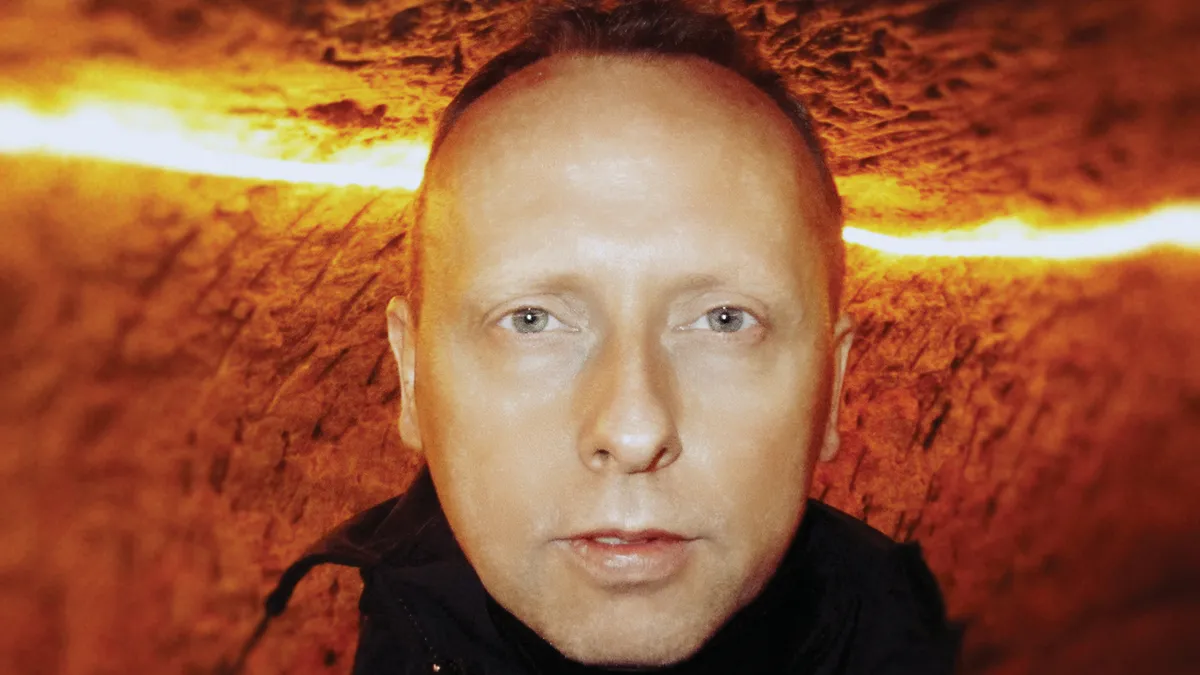
Photo of Carmen Rizzo

Producing, engineering, mixing, remixing, playing keyboards, programming — you name it, Carmen Rizzo does it. What's more, the genres that the multitalented Rizzo works in are as diverse as his job titles. Electronica, world music, rock, R&B, and pop are all styles he's comfortable with. His eclectic credit list (see “Carmen Rizzo: A Selected Discography”) includes artists ranging from Paul Oakenfold to Coldplay to Grant Lee Phillips to Kate Havnevik to Jem to Seal; he once even mixed a Ray Charles project.

Rizzo has a solo career as well. His latest CD is called The Lost Art of the Idle Moment (see Fig. 1). In 1999 he put out a CD called Life in Volcanoes, along with singer Christina Calero, under the band name of Povi. In his “spare time,” Rizzo is on the Advisory Council of the Producers and Engineers Wing of the Recording Academy.

FIG. 1: One reason that Rizzo put out his latest solo CD, The Lost Art of the Idle Moment, was to call more attention to his production skills.

When I interviewed Rizzo by phone for this story, he was somewhere in New Mexico, on the road with Niyaz, a world-music-influenced group he belongs to that also includes Persian vocalist Azam Ali and multi-instrumentalist Loga Ramin Torkian. “We've toured on and off for the last two years from all over Europe to India to Tokyo to Turkey to Montreal. We've done some really amazing gigs,” Rizzo says. “I'm very, very proud of the project. It's sort of a Middle Eastern electronic project.” But he adds that he's “trying to fade away from it” because it takes up too much of his time and he's got so much else going on.

You've worn many hats so far in your career. What's your favorite one?

I would say that producing is really how I make my living, and it's what I enjoy the most. That's parlayed into remixing a lot of records, and participating as a musician and programming and such. But it's evolved into being a recording artist. The reason I made the Povi CD, and my current solo record, was not to hopefully become a rock star or anything; it was really just to get noticed more as a producer. So people would notice my music as an artist, and a producer, and would hopefully give me more work as a producer.

But your solo career turned into more than that.

It kind of started out when I was doing the Paul Oakenfold record [Bunkka]; my manager at the time said, “You know, you're doing all these tracks, and this and that. You should do another artist record.” And it just kind of evolved that way. I'm fortunate enough that I have a very eclectic career. I've kind of purposely handcrafted that, and I've met a lot of wonderful people, done a lot of cool records, and so when it came time to do my artist record, it was convenient and easy to reach out to people that were credible, like a Grant Lee Phillips, Esthero or a Ladybug Mecca, or even Jem or now Kate Havnevik.

When did you start working professionally in music?

Well, I would say that I probably got my start in 1984 at Westlake Studios [in Los Angeles] as sort of a gofer. But I was working professionally in '89.

So you were there in the early days of MIDI.

Oh, absolutely.

And you saw all the technological changes, and the evolution of digital audio.

Yes, I'm 43 now. I showed up in Los Angeles in 1984 with $1,000, and I didn't know anybody. I was lucky to get the job at Westlake Studios, which of course was very primitive. I was fortunate to be around, seeing the first 3M digital tape machine, being schooled on analog tape machines, all the obvious old consoles. I can remember seeing a [Yamaha] DX7 for the first time, a sampler, all of that stuff. I feel old when I talk to kids.

So in the beginning you were an engineer?

Yes. I was schooled as an engineer, and then I was fortunate to start to mix records. And then where I think my career changed was when I started working with [producer] Trevor Horn. In the early '90s, I was working for Seal and Trevor, and I was going to London a lot. Trevor was way ahead of the curve. So I was involved with Euphonix consoles and samplers and all these wonderful keyboards, and that's when my career changed.

Was Horn your mentor as a producer?

Yes, because I was around him for so many years engineering and programming and mixing for him that I was seeing how he made records. I was such a fan of his work.

Is there a signature aspect to your productions?

For one thing, I pride myself on instrumentation. And sound selection is very important to me. I've really tried to create a very cinematic, lush sound, but one that is very complementary of modern electronics and organic instrumentation. And I think that that's something that I learned from Trevor. If you listen to a lot of his records, whether it's Frankie Goes to Hollywood, or Seal, or Yes, or any of those, there's a good texture of modern electronic instrumentation and beautiful organic instruments. And that's something I've tried to model my style after, which is to be very creative in the sound selection.

Are most of the people you work with individual artists, rather than bands?

Well, yes. I would say that. I don't work with as many bands as other producers do. I definitely have, though, but usually I'm sort of the person to go to when somebody wants to be a little bit edgy or a little bit different.

Read more of the Carmen Rizzo interview


Fill in the form below and click Order Now! to get two years (26 issues) for just $23.97 - the regular price of one year. But HURRY - this offer won't last forever! (U.S. orders only please)

First Name: Last Name:
Address: City:
State: Zip:
Email:
This data will be sent directly to Electronic Musician Magazine  and will not be used for any other purposes.

Get Copyright ClearanceWant to use this article? Click here for options!
© 2008 Penton Media, Inc.

Back to Top