Audio Insider
Online Monthly Pass

Register for an Account Forgot your Password?

Most Popular


The EM Poll


pop_quiz_button

browse back issues

Newsletters

emusicianXtra icon
EMSoftware update icon
MET Extra icon
eDeals Newsletter icon


Subscribe to newsletters here...

Roger Powell Returns!

Aug 18, 2006 4:30 PM


         Subscribe in NewsGator Online   Subscribe in Bloglines

CURRENT NEWSSTAND ISSUE

Read the full Table of Contents for the issue on sale now! Click here

Subscribe for only $1.84 an issue!

Please tell us about yourself so we can better serve you. Click here to take our user survey.

Personal Studio Series

Mastering Steinberg's Cubase™

This special issue is not only a must-read for users of Cubase™ software, but it also delivers essential information for anyone recording/producing music in a personal-studio.

Click for more
EM Podcasts

Listen to these latest podcasts and more:
Engineer Chuck Ainlay on his mixing techniques. Go

What's New: Sony Creative sound library, Expanse Refill for Reason, more. Go

eDeals Newsletter for Discounts on Gear

Get First Dibs on Hot Gear Discounts, Manufacturer Close-Outs and Job Opportunities when you sign up to receive eDeals E-newsletter, sent twice a month. Check out an issue get advertising info or subscribe

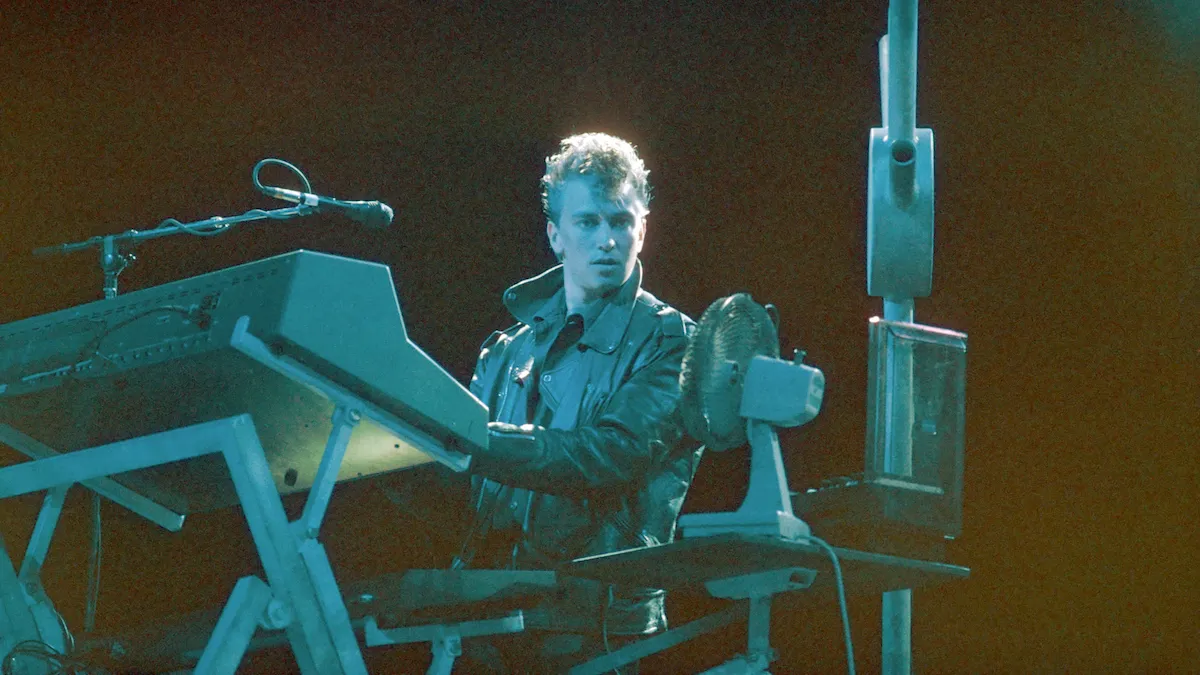
Best known for his solo albums—Cosmic Furnace (Atlantic; 1973) and Air Pocket (Bearsville; 1980)—and his work with Todd Rundgren in Utopia, synthesist Roger Powell has just completed his long-awaited third solo project, Fossil Poets (Inner Knot; 2006). It is due to be released October 24, 2006.

Roger Powell with his Synthesis Technology MOTM analog synthesizer.

As a sideman, Powell earned a gold record for his work with Meat Loaf on Bat Out of Hell (CIR; 1977), and played keys behind David Bowie during the tour that resulted in the exceptional live document Stage (EMI; 1978), as well as in the studio for Lodger (RCA; 1979).

Technically inquisitive, Powell pushed the envelope with innovative keyboard instruments, such as the Powell Probe, in the '70s and '80s. This curiosity also included writing software for the nascent personal computer, which eventually led to his current position at Apple Computer as Senior Engineer, Technical Lead: Apple Professional Applications.

During our interview, Powell informed me that, at this point in his life, he has been a software engineer longer than he was a professional keyboard player.

Why did it take so long to get the third solo record out?
You mean 26 years is a long time? [Laughs.]

It seems like it was simmering for awhile.
When Utopia disbanded in '85, I was taking a break from music. I got sidetracked into computer programming and wrote one of the earliest MIDI sequencer programs, called Texture, for MS-DOS. I decided at that point that, since the band wasn't working anymore, I'd spend some time being a software engineer. So I took a job at WaveFrame in Colorado in 1987 and moved out there. I was firmly in the software development camp at that point and enjoying a regular job and a paycheck. [Laughs.]

Around that time I was working on a musical project that was supposed to come out on the Passport label, tentatively titled Architecture. Those were more like demo recordings. I wasn't really happy with them being a final master. But it didn't matter anyway because the label went out of business. There was one cut that was released, called "Connections to the Outside World" on Larry Fast's label Audion (his side-label on Passport). He put out a sampler LP, and that song ended up on there.

That was actually a pretty interesting production. It was recorded live, using the sequencer Texture, which was playing back all the parts (drums and everything). I recorded live, solo, over the top of it. And that was done direct to 2-track to a Sony PCM digital recorder that used VHS tapes. So that was as far as anything got from Architecture.

Fossil Poets (InnerKnot)

I went to work for Silicon Graphics in 1991 and was real busy with that. Six years later, I went to Macromedia, which had a program called KeyGrip. Six months later, Apple bought that whole division and developed Final Cut Pro.

Where did you get your programming chops?
I'm self-taught. When the first Intel personal-computer chips came out, you could buy computer kits, with a chassis and a power supply, busses, and cards to make a little computer. I built a couple of those S-100 systems. Once I built them, I had to figure out how they worked.

They had switches on the front for toggling in binary code. I just bootstrapped myself up with that. Then I started writing assembly language programs, toggling in the assembly language bits for the Intel chip-set. Then I got a cassette machine with an interface, and I could then load a mnemonic assembler and a monitor. I just went up from there as better computers came out.

I was affiliated with Microsoft for awhile: I was working on a music program for the ill-fated PC Junior. The good thing about the Microsoft connection is that they shipped me an IBM PC when they came out, and a C compiler. So I started learning C.

The first version of Texture was written for the Apple II in 6502 assembly language. It was called Texture because you entered the notes from a text-editor. And I figured out this way that you could flip back and forth from any text editor and my program. Then you would hit this button and it would compile that and play it back through a 7-channel D/A converter that was being clocked by a test oscillator. The D/A was essentially the MIDI, along with a parallel port that provided 5V up and down to flip the bit, so that was the gate.

What instigated you to begin this new project?
I decided in early 2000 that it was time to get back into music. I started to experiment with some of the analog modeling synths that came out—the Nord Lead, and so forth. Over a period of a couple of years, I had created all these little DNA fragments of music, but nothing was completed. I figured it was time to finish something, and in order to do that, I needed some help. That's what a producer does, so I looked up an old friend of mine, Gary Tanin, who lives in Milwaukee. I brought him a bunch of CDs of all these short pieces, and we decided that we had enough raw material there to develop a style for another solo recording.

We worked on that for about two years. The Fossil Poets is a collaborative effort between myself and Gary, and a really fabulous guitarist, Greg Koch. Basically we operated in serial fashion, if you will, by sending CDs of material back and forth. Gary would make longer arrangements out of the fragments I sent, and I would OK those and add other parts.

So it was sort of a slow process of getting back involved in it. But the key was hooking up with Gary so that I didn't have to do every single thing on the recording. And that just took awhile.

I wanted to take a fresh approach and work with someone that was not related to my past, if you will. He's very, very good at helping me with the arrangements.

Were there times when you would ask Gary to back up a bit and restructure something? Or did he always do the right thing with the material?
Some of the pieces I handed him were more formed than others. A lot of the work was getting things rearranged and parts put together. And, yeah, we had lively discussions about what worked and what didn't seem to work. But in general, I felt that he had a real good knack for understanding what I was trying to do. Although, I didn't even know what I was trying to do in some cases. [Laughs.] Things just evolved.

He produced Greg, the guitar player. I wasn't there for those sessions, but he would send me the results and I would comment on them. At first there was a lot of guitar. And I mentioned that I'd need to edit some of that so there's some space for me. But over time we developed a work flow that seemed to serve us pretty well.

To what degree did you integrate the analog synths and digital sequencing into one system? In particular you used the Synthesis Technologies MOTM analog system.
The MOTM is used a lot for textures on the album. And it was also used in some places for sequencing. For those parts, I used a Korg Electribe EA-1 and a Kenton MIDI-CV converter to drive the MOTM. I would just use the MIDI Out from the Electribe—it was like having an analog step sequencer.

I used other hardware as well. I have a Moog Voyager, of course, and a Nord Lead and Nord Modular. The Nord Electro is featured on the album as well, wherever you hear an electric piano or a Clavinet, and for most of the organ sounds.

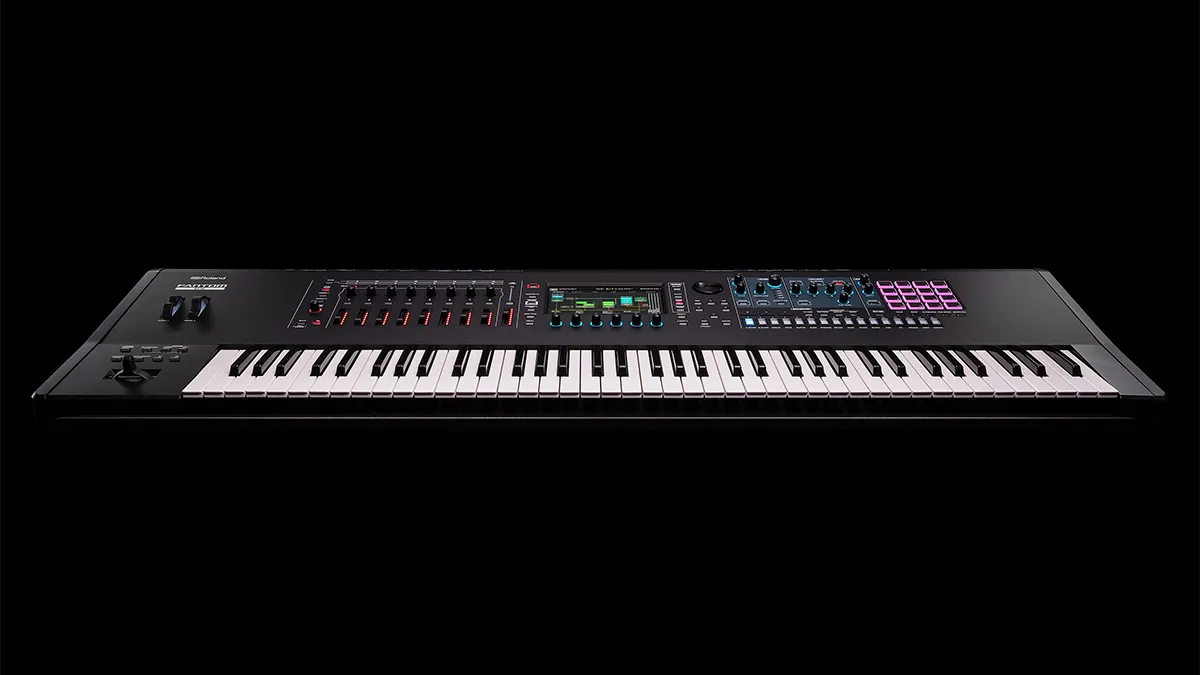
The actual hardware instruments I have setup today are the MOTM, the Voyager, and the Triton Extreme. I don't have a lot of room for other stuff in my studio.

And I used just about every program known to man on this album. A lot of the original material was developed in Sony Acid, because that provided a quick way to put rhythmic ideas together. And then I moved into Cubase SX. I used a bunch of soft-synth plug-ins. I'm fond of the LinPlug instruments Albino and CronoX.

In addition, there are some acoustic cameo appearances on the album, because everything was so electronic everywhere else. I played flugelhorn, Native American flute, accordion, and mandolin. Each instrument is only used once. There are two acoustic piano pieces, as well.

We didn't want this album to go in just one direction. We came up with this phrase: It's retro-futuristic. So it's got a lot of analog-like sounds and some acoustic stuff. But it's also got the current groove oriented styles.

Get Copyright ClearanceWant to use this article? Click here for options!
© 2008 Penton Media, Inc.

Back to Top