Most Popular


The EM Poll


CURRENT ISSUE

SUBSCRIBE
$1.84 an issue!

EM DIGITAL EDITION
Try it for free today!

browse back issues


Follow Us On...


Cakewalk SONAR V-Studio 700 (Win) Review

Aug 1, 2009 12:00 PM, By Brian Smithers


         Subscribe in NewsGator Online   Subscribe in Bloglines
 

HARDWARE AND SOFTWARE COMBINE FOR A POWERFUL DAW

CURRENT NEWSSTAND ISSUE

Read the full Table of Contents for the issue on sale now! Click here

Subscribe for only $1.84 an issue!

Please tell us about yourself so we can better serve you. Click here to take our user survey.

MixBooks Logo
Life in the Fast Lane

This collection of St.CroixÕs columns was assembled during the two years following his death of cancer in May 2006. Included are many of his most-read columns, as well as personal notes, drawings and photographs.

Click for more books
EM Podcasts

Listen to these latest podcasts and more:
Bela Fleck on recording Jingle All the Way.Go

What's New: software and sound products. Go

eDeals Newsletter for Discounts on Gear

Get First Dibs on Hot Gear Discounts, Manufacturer Close-Outs and Job Opportunities when you sign up to receive eDeals E-newsletter, sent twice a month. Check out an issue get advertising info or subscribe

FIG. 1: The VS-700C is a well-laid-out control surface that integrates beautifully with SONAR. It also controls the interface’s preamps.

FIG. 1: The VS-700C is a well-laid-out control surface that integrates beautifully with SONAR. It also controls the interface’s preamps.

Since Roland acquired “a major share” of Cakewalk in early 2008, many of us have been wondering what new products might grow out of this synergy. The SONAR V-Studio 700 is a pretty compelling answer to that question. It comes close to being a complete studio in a box. Add your own computer, monitors, a keyboard and a microphone (or eight), and you are well equipped for the lion's share of tasks that a personal, project or mid-level studio would be expected to perform.

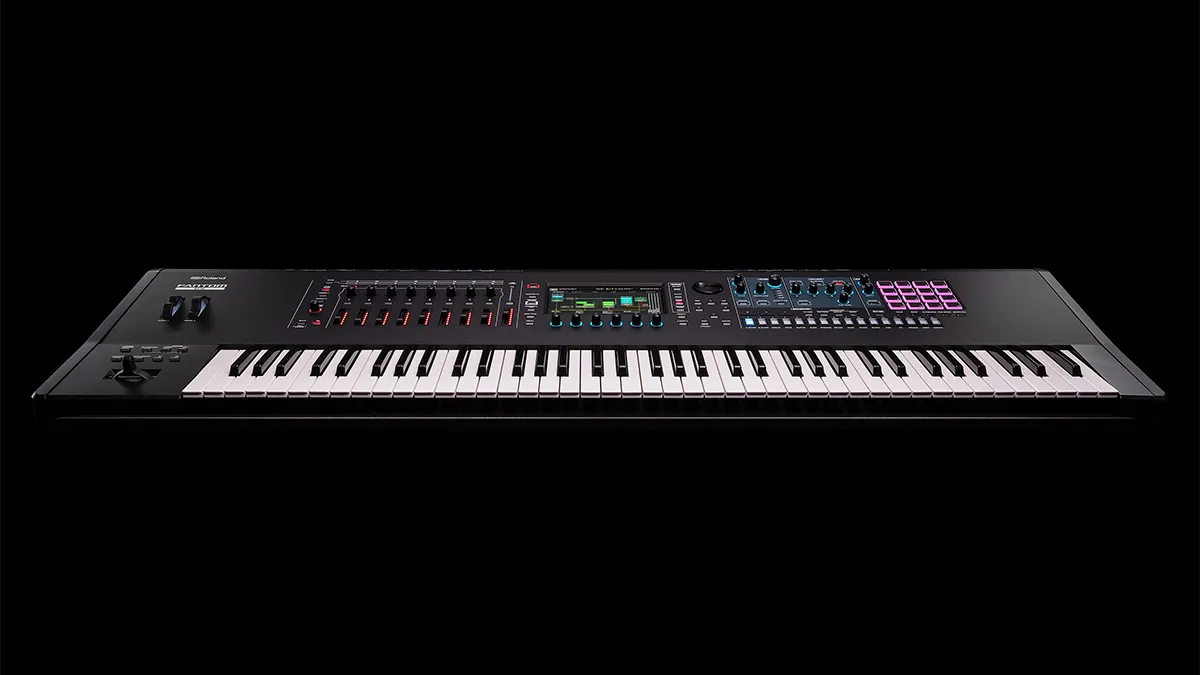
The V-Studio 700 comprises five major components: the VS-700R audio interface, the Roland Fantom VS hardware synth tucked away therein, the VS-700C control surface, soft synth Rapture and SONAR 8 Producer software. The whole system is tightly integrated, allowing you to control both hardware and software largely from the control surface.

I tested the V-Studio 700 — running on my Windows XP-based Toshiba Tecra notebook — in my home studio and on a couple of remote orchestral recordings. Although my PC's Centrino processor is a bit behind the curve these days, it is well within Cakewalk's stated system requirements and ran the system perfectly. The SONAR V-Studio Website (sonarvstudio.com) delineates the V-Studio 700's features quite thoroughly, so I'll focus on the practical and creative implications of the system's design and implementation. SONAR 8 Professional has been reviewed favorably in these pages, so I'll simply say that this world-class DAW is a worthy centerpiece for this well-designed system.

Ready Mix

My first task for the V-Studio 700 was mixing a concert, and I was immediately reminded how much more useful automation is when you have a good control surface (see Fig. 1). Without bothering to look at the manual, I set the board up to record track automation, and I was off and running. Setting up the board was actually a bit easier than setting up a track for automation in the software, and actually writing the automation felt like playing by ear (to borrow a musician's phrase). Navigating the session was a snap with the dedicated transport controls, although I'm a bit disappointed that the shuttle wheel doesn't play as it moves, making it effectively a fast-forward/rewind wheel instead.

The well-thought-out control surface features adjustable touch sensitivity and the ability to lock a track to a specific fader as other tracks bank around it. During critical playback, you can also prevent the motorized faders from playing back automation to keep them quiet. All of its controls felt solid and operated smoothly. Although I might have preferred non-detented rotary controls, holding Shift allows finer adjustments, and you can also press the knobs to switch controls or to return a parameter to its nominal value.

The LCD allocates seven characters to each channel strip — too few for some parameters. When assigning an audio input to a track, for example, the abbreviation -7001-2 is used to represent three different input options: Left VS-700 IN 1-2, Right VS-700 IN 1-2 and Stereo VS-700 IN 1-2. The rotary encoder has a separate click for each, but the display does not change, making I/O assignment a bit like reading Braille. Fortunately, you can tell SONAR to use “friendly names” for I/O and shorten the default names to better display on the LCD.

You can manually control the VS-700R's preamps largely from the control surface. A mode called I/O Control gives tactile control over the preamp gain, pad, polarity and low-cut filter, in addition to the attack, release, threshold and enable/disable of each channel's compressor. It would be nice if you could control phantom power and compressor gain and ratio, and if the LED could at least momentarily indicate which parameter is being controlled by the Mute, Solo and Arm buttons. (For tips on getting the most out of the VS-700C, check out the Online Bonus Material.)

I/O Silver

The VS-700R's eight remote-controlled preamps offer 64 dB of gain and sounded very clean and natural, capturing an orchestra concert quite nicely. Its eight-segment LED input meters are a welcome feature, although all other functions (outputs, digital I/O, MIDI I/O and so on) have only signal-present LEDs. All connections are labeled on the top of the unit, making it far easier to figure out where to plug things when you reach around the back. Two independent monitor outputs and word clock I/O are just two of many features that show that the VS-700R was designed for professionals.

The interface features direct monitoring by means of a simple mixer window that routes a single monitor mix to the main, sub or digital outs in any combination. I used this to create a monitor mix and to record a real-time stereo safety to a handheld recorder via S/PDIF. In a perfect world, I would have been able to create different mixes for each, and Cakewalk says this may be offered in a future update.

Before taking the unit on location, I set it up at home to record some mic inputs, routing that digital backup to my handheld, and then I shut down SONAR to see what would happen in the event of a crash. I was very impressed to find that the interface remembered its settings and kept on passing a clean signal to the backup. I restarted SONAR and picked up where I left off, comforted that I'd be able to copy and paste in the missing seconds from the safety if this ever happened on location.

Get Copyright ClearanceWant to use this article? Click here for options!
© 2009 Penton Media, Inc.


Acceptable Use Policy
blog comments powered by Disqus

Back to Top